
Content Creator vs. Business Owner: Who Owns the Next Step?
Before hiring someone to make more content, agree who owns the offer, approvals, enquiries and sales. Better creative cannot replace a missing handoff.
By Patrick Grabbs · November 10, 2026
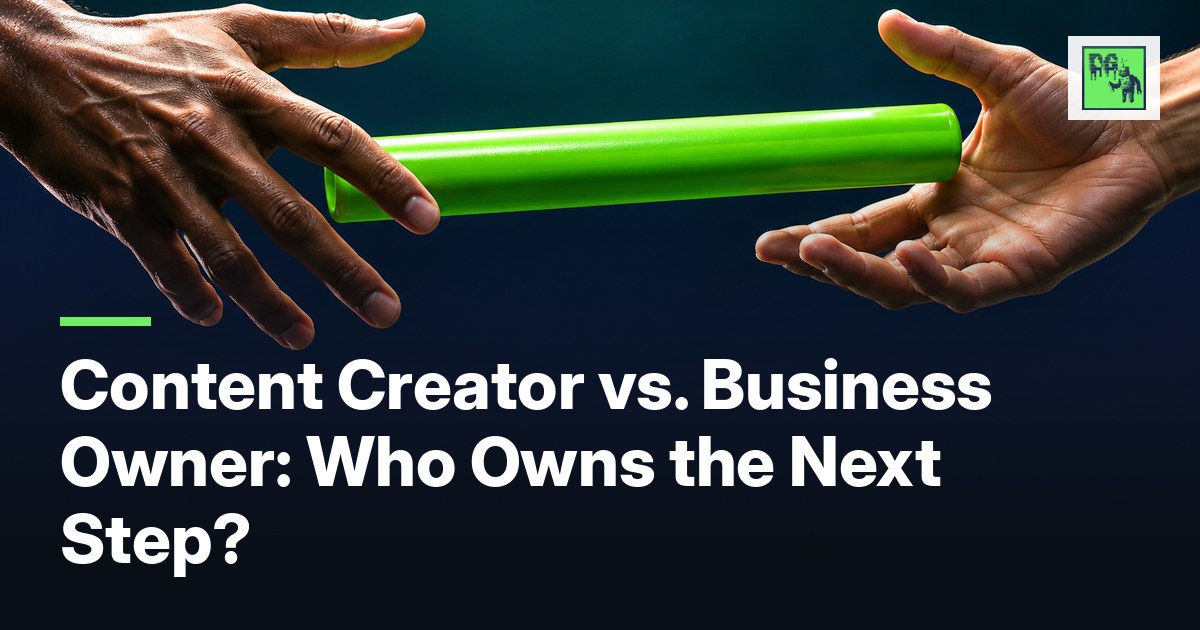
What should a content creator and a business owner each be responsible for? The creator should own the creative work you actually agreed to buy; the owner should make sure the offer, approvals, customer response and sales decisions have named owners, whether those jobs stay in-house or are explicitly delegated.
That is a practical starting point, not a universal job description. A filmmaker, social media manager and business-building partner can contribute very different things. Trouble starts when everyone uses the word marketing but means a different job.
You think you hired someone to help bring in customers. They think you hired someone to film and edit. Neither assumption tells the interested viewer what to do next.
Content creator vs. business owner responsibilities
Separate the work before you argue about whether it worked. Here is a useful way to frame the conversation, rather than a claim about what every provider includes.
- The offer: the owner decides what the business can credibly sell, who it serves and what it can deliver. A creator can help express it, but should not invent it.
- The creative: the creator owns the agreed concepts, production and edits. Publishing, account management and replying are separate jobs unless included.
- The approval: a named decision-maker confirms that the message is accurate and approves work within an agreed review window.
- The enquiry: someone monitors the response destination and handles legitimate requests. That person needs the authority and information to help.
- The sale and delivery: someone assesses fit, makes the offer and ensures the business can fulfil what was promised.
One person might hold several responsibilities. A larger team might split them. The important question is whether each person knows where their responsibility begins and ends.
Do not hire an editor for a problem you cannot name
If the footage is weak, the message is confusing or production keeps stalling, creative support may be the missing piece. Be specific about the improvement you want. Better interview footage and a clearer explanation of your service are reviewable requests.
If the offer itself is unclear, more polished footage may simply present that uncertainty more attractively. Before the shoot, the owner needs to explain what customers are considering and why the business is equipped to help them.
If interested people already reach out but nobody answers, another filming day does not assign the reply. That work needs an owner too. This is not an argument against hiring a creator. It is an argument for hiring them to solve the problem they can actually influence.
Give creative decisions a business owner
A creator needs useful boundaries, not a stream of contradictory preferences. Name who can approve claims, who can confirm what is available and who makes the final call when feedback conflicts.
Consider a hypothetical training business. The founder approves the service description, a team member reviews the video and another person changes the invitation after publication. Each change might sound reasonable alone. Together, they can leave the viewer hearing an offer that nobody has agreed to deliver.
The answer is not to give a creator unlimited authority. It is to give them one reliable decision path. The business owns the truth of the offer; the creator contributes judgment about how to communicate it. Feedback should make the work more accurate or more compelling, not restart the project whenever another opinion arrives.
Name the person who handles interest
The handoff deserves as much clarity as the content brief. If the post invites a business enquiry, who receives it? If someone asks a question the creator cannot answer, who takes over? If the usual person is unavailable, does the request sit unanswered?
Here is another hypothetical example. A local service company commissions a useful demonstration video. A prospective customer responds with a question about the work. The creator sees it but cannot confirm availability; the owner assumes the creator handles all messages. The immediate problem is responsibility, not necessarily the video.
Agree how that request reaches someone who can help. Avoid promising a response time or service availability unless the business can support it. A clear handoff is more useful than an enthusiastic invitation that creates expectations nobody accepted.
Review the work without changing the agreement afterwards
Before starting, distinguish deliverables from business outcomes. A completed video is a deliverable. A relevant customer conversation is a different outcome. A sale is another. You can care about all of them without pretending they are interchangeable.
The creator should be able to explain the decisions within their scope: the audience, message and creative choices. The business should be able to explain what happened to the interest it received. Where information is missing, keep that gap visible rather than assigning blame from a single screenshot.
If you bought production alone, do not retrospectively treat it as a promise to run sales. Equally, someone hired for a broader growth role should not use a posting count to avoid discussing the customer journey. Review against the responsibility actually agreed, then decide whether the next phase needs a different scope.
When the missing piece is broader than content
Sometimes the work crosses the offer, customer acquisition, sales and delivery. An owner may have expertise and an audience, yet need help connecting those strengths into a business that can serve buyers consistently.
That is the distinction behind DRiPGATE's business-building partnership model. It is a conversation about what the business needs and what each side contributes, not an assumption that everyone needs a larger content package. The scope and commercial arrangement depend on the fit.
Questions to settle before the next shoot
Should a content creator handle sales enquiries?
Only when that responsibility is explicitly included and the person has the information and authority to do it. Do not assume access to a social account means authority to make promises on behalf of the business.
Can one person own content and sales?
Yes, if the arrangement is deliberate and the workload is realistic. Keep the responsibilities distinguishable so you can review creative quality and customer handling separately.
What if I need help with the whole business around the content?
Start with the constraint, not a job title. Describe what you sell, what attention you already receive and where the next step becomes unclear. That makes a useful conversation about the kind of support you actually need.
Use the form below to tell Patrick where the handoff breaks down, or explore a DRiPGATE partnership. An enquiry starts a conversation about fit. It does not create a contract, book an appointment or promise a business result.
Great content, but nobody owns what happens next?
Tell Patrick what your business sells and where responsibility gets blurry. Explore whether a business-building partnership fits what you need.
Got it. We'll be in touch soon.